
Body Repair Services: Why Timelines Extend Beyond Initial Estimates
Little Rock, United States - February 26, 2026 / Bale Collision Center (Downtown) /
Little Rock, AR - When vehicles are dropped off for collision repair, initial estimates offer a projected timeline based on visible damage. However, car body repair can take longer once technicians begin work. Bale Collision Center (Downtown) is outlining the key reasons repair schedules extend and why transparency matters during the process.

How Initial Assessments Set Expectations
Visible Damage vs. Hidden Issues
Initial estimates offer a timeline based only on damage visible during the first inspection. Estimators use computerized tools to calculate labor and parts requirements for obvious exterior damage. This baseline helps customers plan, but it cannot account for what lies beneath panels and components.
Modern vehicles are engineered with overlapping structures and integrated systems. These features improve safety and performance, but also make a complete assessment impossible until technicians begin body repair services and disassemble affected areas.
When Hidden Damage Emerges
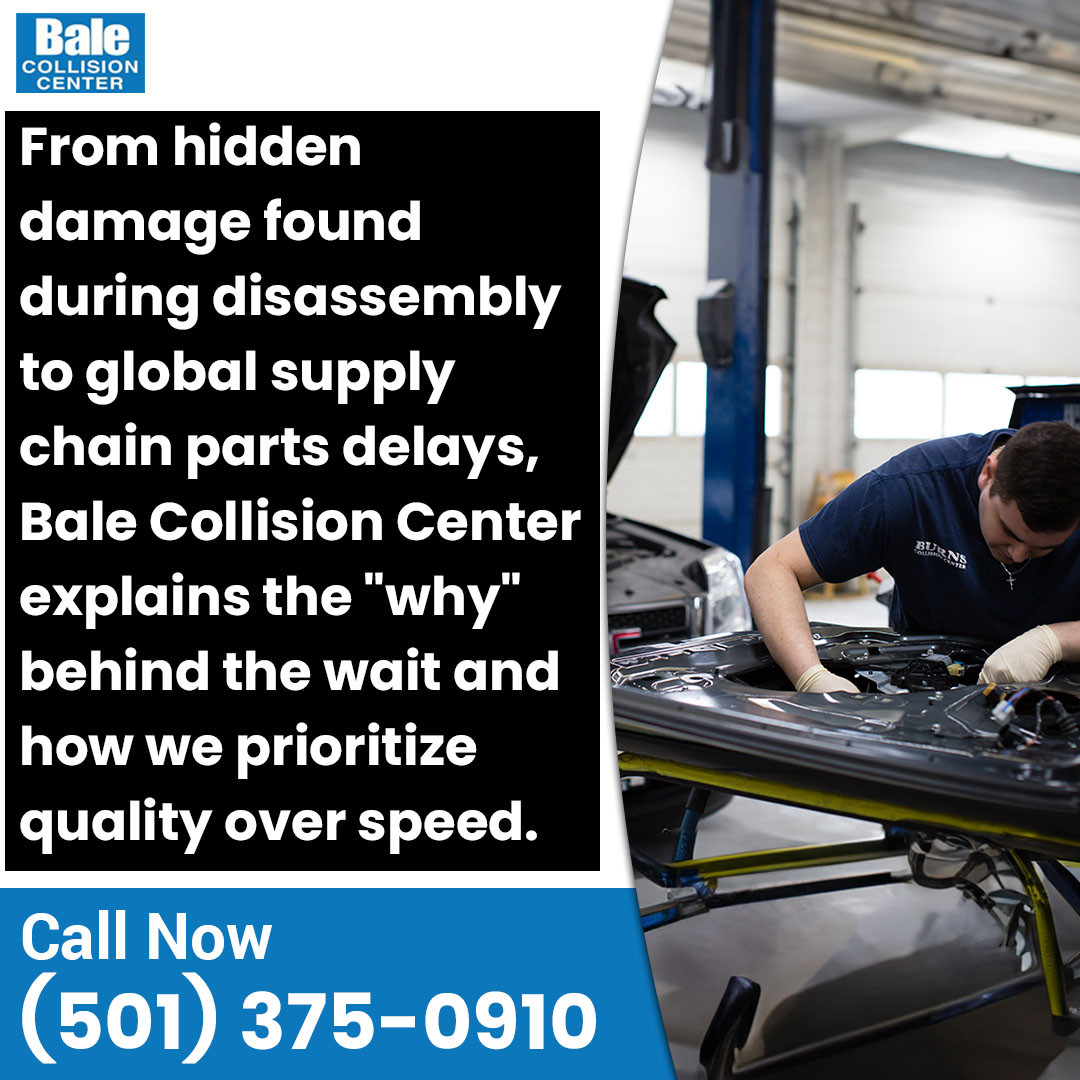
Once panels are removed, technicians often find additional issues that were not visible earlier. What seemed like minor damage can reveal structural misalignment, bent frame rails, crushed wiring harnesses, or damaged safety sensors. Discovery of these conditions requires supplemental work, which naturally extends the overall repair timeline.
Common Drivers of Extended Repair Schedules
Parts Availability and Supply Chain Factors
Obtaining replacement components has a direct impact on repair schedules more than many vehicle owners realize. For common makes and models, standard parts usually arrive quickly. However, specialty components for luxury, imported, or older vehicles may need to be ordered from distant suppliers or overseas. International shipping and limited stock can add days or weeks to repair timelines.
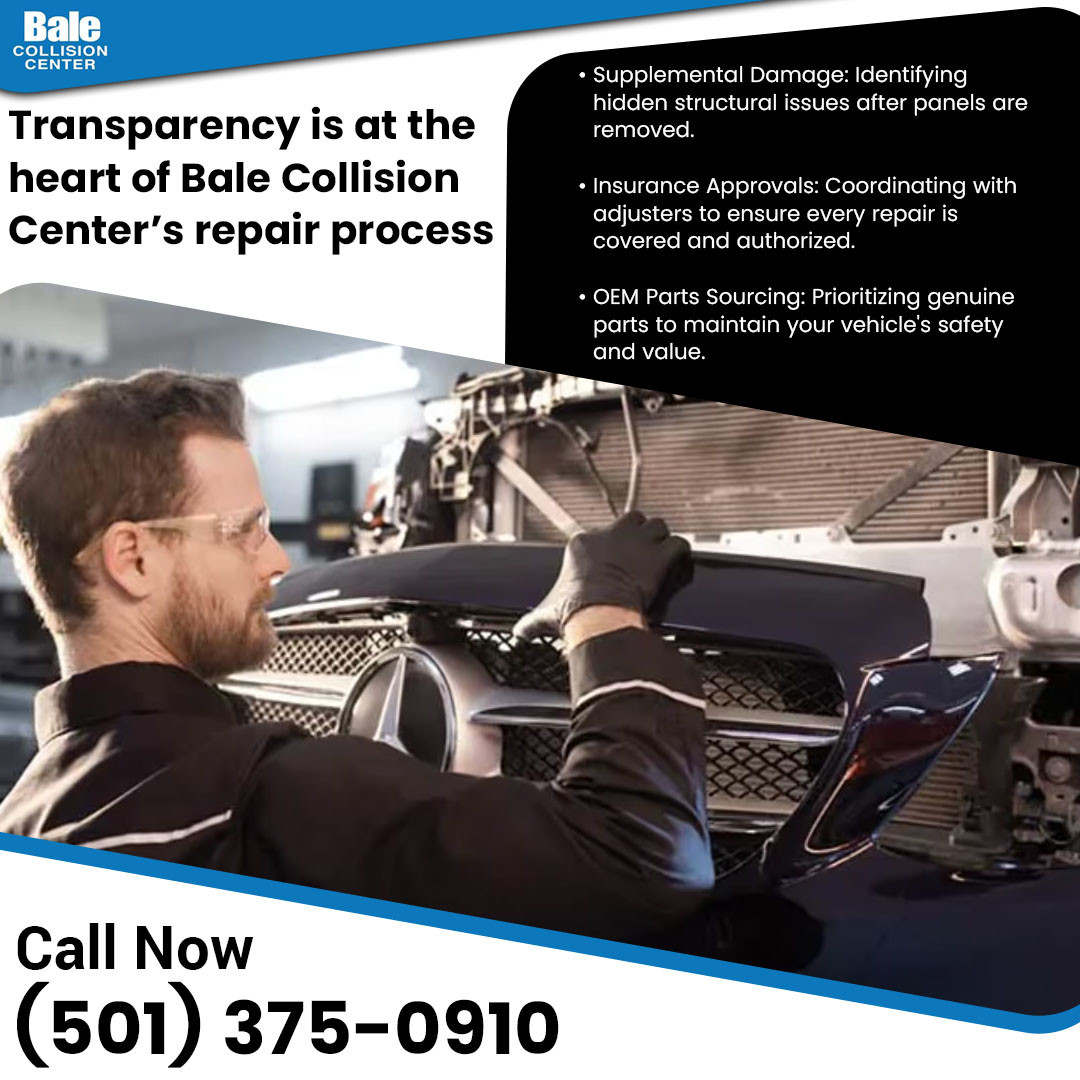
Choosing OEM (Original Equipment Manufacturer) parts ensures proper fit and quality, especially for structural and safety-critical repairs. Shops that prioritize these parts commonly experience longer wait times than facilities that rely solely on aftermarket alternatives.
Incorrect parts shipments also add to delays. Vehicle parts specifications vary widely across models and years, and reordering correct components adds time to the repair process.
Insurance Review and Approval Time
Insurance company protocols play a role in repair timing. Before work can proceed, adjusters review initial estimates and supplemental repair requests. This process can take several business days for straightforward claims, and substantially longer for complex structural or safety system repairs.
When hidden damage is discovered after disassembly, shops submit supplemental estimates that require additional reviews and approvals. These reviews add steps to the timeline and involve communication between repair facilities, adjusters, and vehicle owners.
Technical Demands That Influence Repair Duration
Methodical Disassembly and Structural Repair
Proper vehicle disassembly takes careful time and technique. Modern designs integrate systems and materials in ways that require systematic removal to avoid causing new damage. Each removed panel and component must be inspected for underlying issues, documented, and approved before proceeding.
Structural repair itself cannot be rushed without compromising vehicle integrity. Precision frame straightening systems paired with computerized measurement tools are necessary to restore vehicles to manufacturer specifications. This careful work protects handling, tire wear patterns, and occupant safety in future collisions.
ADAS Calibration and Diagnostics
Today’s vehicles include advanced driver assistance systems (ADAS) such as automatic braking, blind spot monitoring, adaptive cruise control, and lane keeping assistance. These systems require recalibration after structural repair or component replacement.
Recalibration involves specialized equipment and procedures unique to each vehicle manufacturer. Proper adjustment is critical for safety systems to function as intended.
The Role of Paint and Finish Work
Multi-Step Application and Curing Process
Professional paint application is also time-consuming. Waterborne paint systems used in quality auto body shops provide durable, environmentally responsible finishes. The complete process includes surface preparation, primer, multiple base coat layers, and clear coat application. Each layer requires proper drying and curing in controlled settings to prevent peeling, bubbles, and premature failure.
Precision Color Matching
Matching vehicle paint is complex. Formulas differ across manufacturers and sometimes change even within the same model year. Professional paint matching systems examine existing paint and generate custom formulations, so repairs integrate perfectly with the vehicle’s original finish.
Managing Customer Expectations
Communication Throughout the Repair Journey
Clear updates reduce uncertainty when timelines extend. Reputable facilities communicate regularly, explaining completed work, remaining tasks, and reasons for timeline changes. If parts are delayed or hidden damage emerges, customers receive revised completion dates based on current information.
Prioritizing Quality Over Speed
Rushing repairs undermines safety, appearance, and vehicle longevity. Certified technicians follow manufacturer procedures to complete every step correctly. Final inspections verify that all systems function properly, repairs meet OEM specifications, and paint matches the original finish.

Bale Collision Center’s Approach to Timeline Management
Bale Collision Center balances efficiency with quality through systematic procedures and modern equipment. Detailed initial assessments using advanced diagnostics reveal many issues before disassembly begins, reducing surprises later. Estimators thoroughly document all visible damage with multi-angle photographs that support clear communication with insurance partners.
As an experienced provider of auto body repair in Downtown Little Rock, the center maintains high standards with certified technicians, precision frame systems, and controlled paint environments. Regular updates keep customers informed throughout the repair process.
Choose Trusted Auto Body Repair in Little Rock
When you need reliable auto body repair near you, select a facility focused on proper procedures and communication. Contact Bale Collision Center at (501) 375‑0910 or bccdowntown@baleautomotive.com to schedule an assessment and start with an accurate timeline based on your vehicle’s visible damage.
Contact Information:
Bale Collision Center (Downtown)
100 N Cross Street
Little Rock, AR 72201
United States
Jason Spiller
(501) 375-0910
https://balecollision.com/
Original Source: https://balecollision.com/auto-body-shop/body-repair-services-why-timelines-extend-beyond-initial-estimates/